
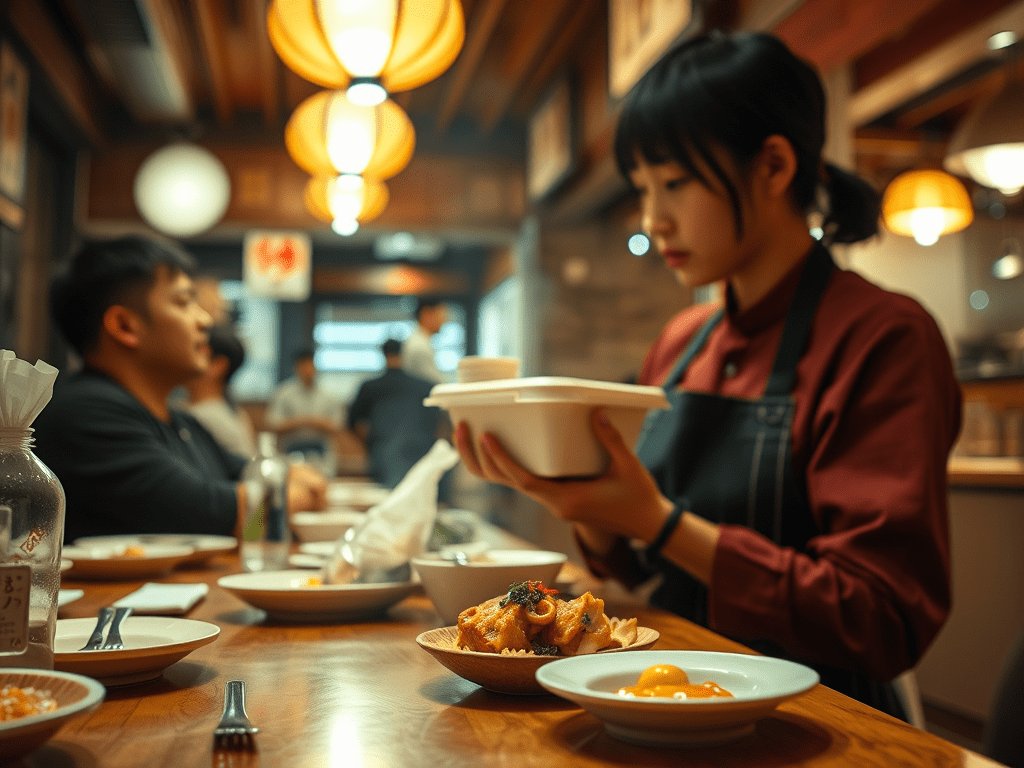
When I studied abroad in Japan back in late 2011, I had my first experience trying to take leftovers home. I was at a big chain restaurant that served set meals and ordered one that came with two hamburger steaks (think Salisbury steak for those in the West). My plan was simple: eat one, take the other home for later.
In my very limited Japanese at the time, I asked if I could take the extra one to-go. The staff looked confused—honestly, even a little shocked. Eventually, a manager came over, and after some back and forth, they reluctantly agreed, on one condition: I couldn’t come back and complain if I got sick. They wrapped the hamburger in tin foil and handed it to me to awkwardly stuff into my bag.
Almost 15 years later, I still remember that moment clearly—and truthfully, the culture around taking leftovers home in Japan hasn’t changed much since.
If you’re coming from the U.S. or Europe, where asking for a doggie bag is second nature, Japan’s approach can be surprising. You might be sitting in front of a perfectly untouched half-plate of karaage, wondering why the staff looks apologetic when you ask to take it home. So… what’s going on?
First, it’s important to note that takeout itself is totally normal in Japan. You’ll see people grabbing bento boxes from convenience stores, ordering fast food to-go, or using apps like Uber Eats—especially since COVID made delivery and takeout even more common.
But when it comes to taking leftovers home from a sit-down restaurant? That’s where things shift—and in many cases, it’s just not allowed. Even restaurants that offer takeout separates their regular menu and takeout menu and in most cases its very limited compared to the regular menu.
The biggest reason – health and safety. Japan has strict hygiene regulations, and once food leaves a restaurant’s controlled environment, they can no longer guarantee it will be stored or reheated properly. So even salad you may not be able to take the leftovers home because most of those ingredients are considered raw … If a customer were to get sick, the restaurant could potentially be held liable—even if it wasn’t their fault. For many places, it’s simply not a risk they’re willing to take.
There’s also a cultural side to this. In Japan, finishing everything on your plate is a sign of respect for the person who made your food. Leaving leftovers can be seen as wasteful or inconsiderate and you’re encouraged to only order what you can actually finish. Personally, I almost always ask for a smaller portion of rice because I know I won’t finish a full one.
Another practical reason: most restaurants just aren’t set up for it. In many places, especially small local spots, takeout containers aren’t standard. And even if you bring your own, some staff may still say no—again, for safety and liability reasons.
That said, there are exceptions. Family restaurants and some international chains are sometimes more flexible, especially if they already offer takeout and have the right containers on hand. They might still ask you to assume responsibility if you take food home, but they’ll often accommodate polite requests. If you want to ask in Japanese, try saying:
「これを持ち帰ることはできますか?」 (Kore o mochikaeru koto wa dekimasu ka? — Can I take this home?)
In recent years, I’ve seen some government efforts on TV and in the news to change some of the resolutions to encourage restaurants to reduce food waste, and there’s hope this may lead to more relaxed policies in the future. But for now, Japan’s “clean plate” culture is still very much the norm.
So if you’re dining out in Japan, it’s best to order mindfully and enjoy your meal in the moment. And if you’re craving something portable, there’s always a beautifully wrapped bento box waiting for you at the konbini.
 nihonchique