
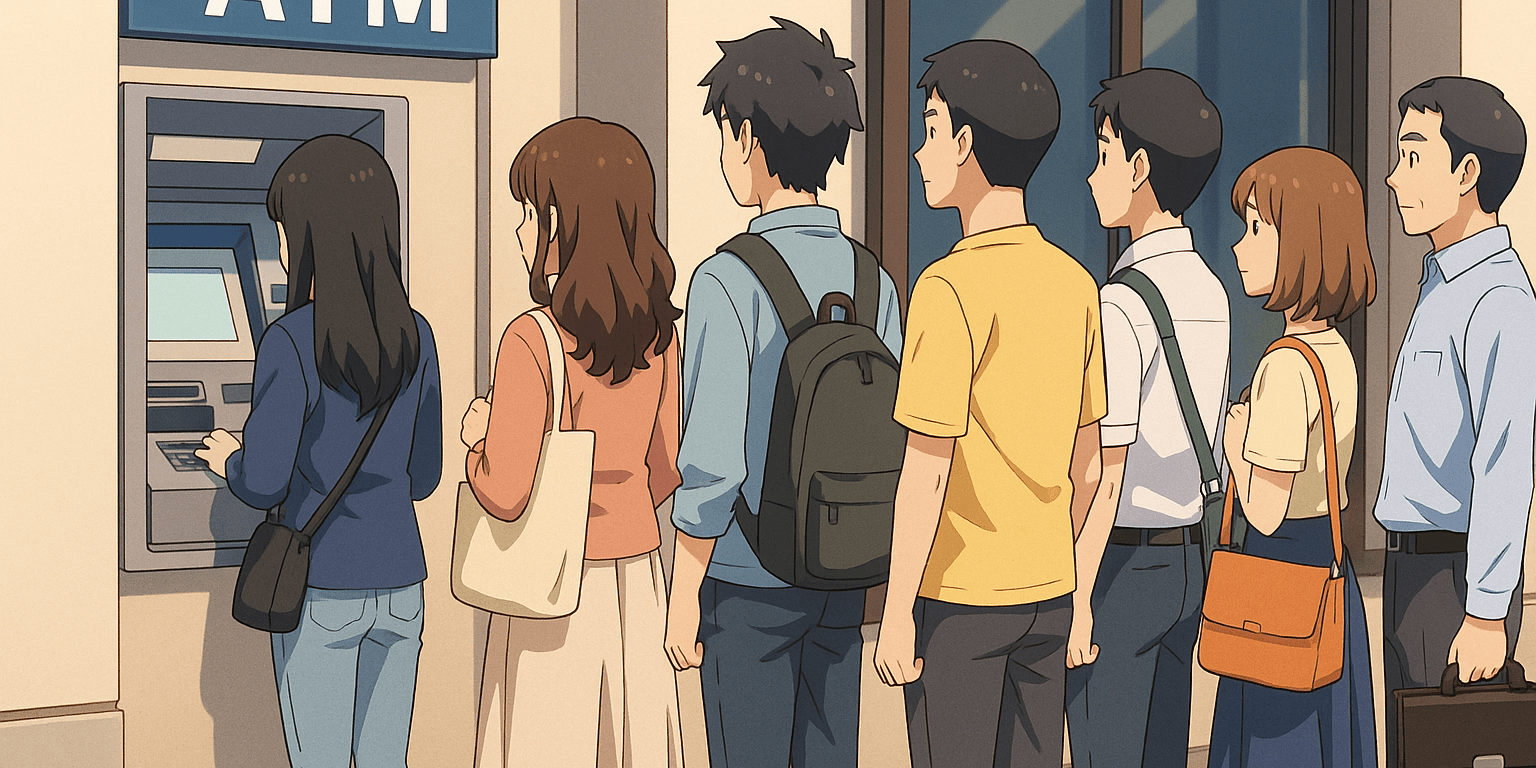
If you’ve lived in Japan for a while, you’ve probably noticed something odd near the end of the month — long, winding lines at the ATM. The first time I saw it, I thought, “Is something wrong with the banks? Why are there so many people at the ATM? Is there something I’m supposed to do??” But nope, it was just payday – Which for most workers in Japan, happens 1 time a month.
The end-of-month ATM rush is one of those small but fascinating details about life in Japan. It reminds me how tradition and modern life continue to dance together here — perfectly balanced, in their own unique way. Now, let’s dive a bit more into why this line at the ATM occurs on the 25th.
Japan Is Still (Surprisingly) Cash-Based
Despite being a country famous for its modern image, cash still reigns supreme in many parts of Japan, as I have mentioned in a previous blog post. You’ll often need it for:
- Local mom-and-pop restaurants and izakayas
- Small clinics or pharmacies
- Street markets and festivals
- Sometimes rent, health insurance, and utility payments (yes, still!)
So when payday hits, many people head straight to the ATM to withdraw their spending money for the entire month to avoid excessive fees. It’s not unusual to see someone walk away with a literal envelope of bills, ready to budget the old-fashioned way. This marks one more way that Japan stays a bit more archaic in some ways when it comes to daily life – just like how the fax machine is still very much present in the office and paperwork needs to be manually signed for the most part.
One Payday, One Withdrawal
Most companies in Japan pay their employees once a month — usually on the 25th or the business day before that if the 25th falls on a weekend or public holiday. That means everyone gets paid at the same time, and everyone hits the ATM at the same time.
People withdraw what they’ll need for:
- Daily spending
- Monthly budgeting
- Cash-based bills or payments
As a tip – lunchtime and after 5 p.m. on payday are peak hours for these lines!
Bills Still Paid in Cash
While online banking and cashless payments have become more common, there are still plenty of people who prefer paying bills the traditional way and in person – especially the elderly. Many still pay utilities or taxes at the convenience store, make manual transfers at the ATM, or withdraw cash to pay insurance premiums and school fees.
For a lot of people, payday isn’t just about getting paid — it’s also “bill day,” when they handle all their monthly payments in one go. Fun fact, Rent is usually also due on the same day as payday!
Habit and Peace of Mind
There’s something deeply cultural about physically handling money in Japan. Many people feel more in control when they can see their money — dividing it into envelopes for rent, food, or savings. It permeates even into weddings, bonuses paid in cash, etc. Some restaurants and smaller business still find it easier to do taxes and accounting on a solely cash basis. Many people even still have bankbooks instead of ATM cards that physically tracks each transaction, despite banking becoming more modern in the past 5 years or so.
Final Thoughts
Next time you see people standing in or find yourself stuck behind a line of people at the ATM on the 25th of the month, don’t be surprised — it’s just payday in Japan. Not a glitch in the system, not a banking crisis, just another part of daily life and finances of the typical Japanese person.
 nihonchique