I’ve lived in Japan for 13 years, and one of the things I’ve heard over and over is that it’s hard to form connections with Japanese people—or that many only want to be friends to practice English. While that can happen, I’ve found that this explanation misses a much bigger part of the picture.
For me, most of the connections I’ve built here came down to language and time.
I made the effort to learn Japanese and, more importantly, to actually use it. There’s always that initial moment where people are quietly assessing how much Japanese I really speak. But once that barrier drops—especially in Osaka—the tone changes quickly. The questions start flowing. The conversations loosen. Jokes happen. Things feel human instead of transactional.
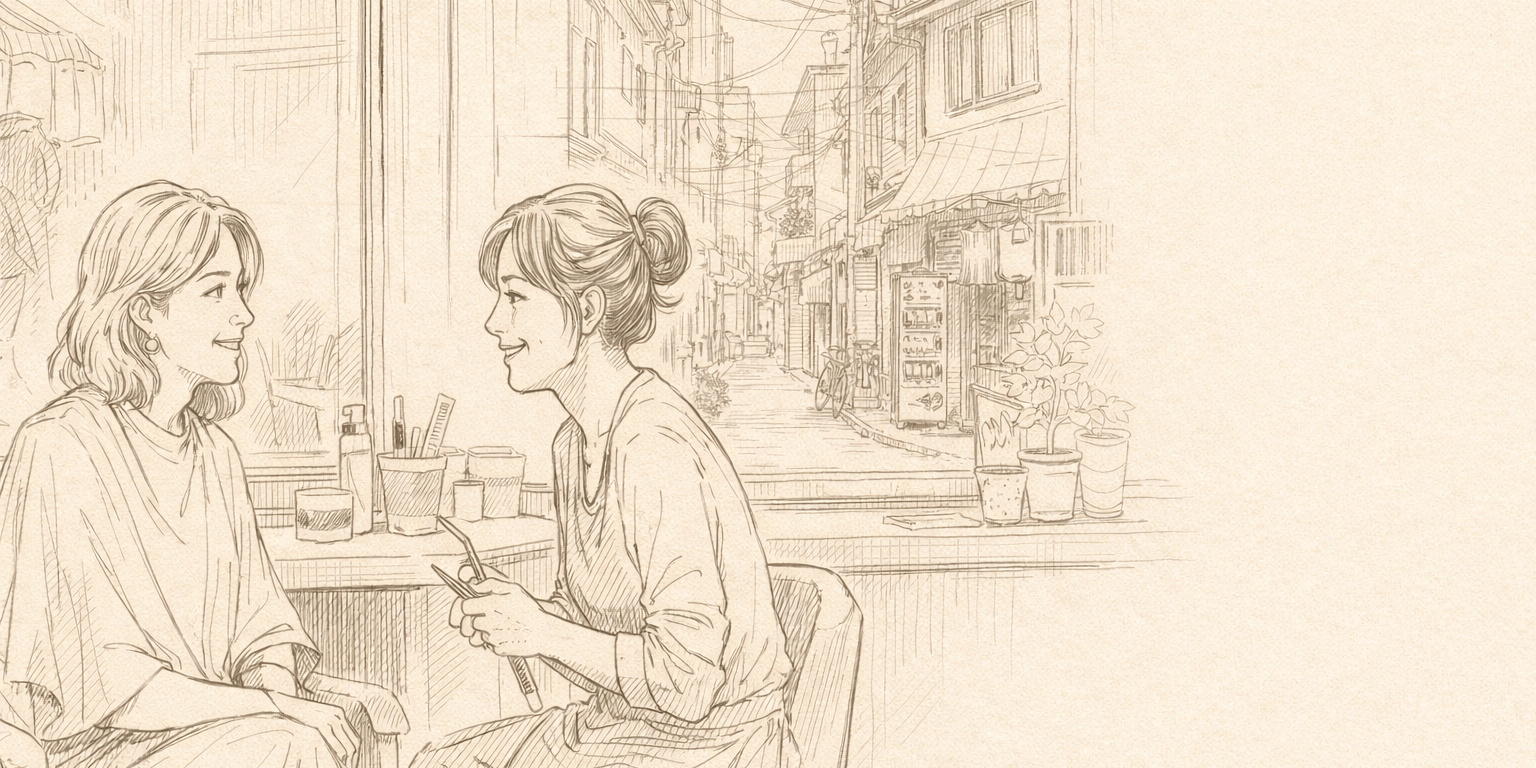
Some of the most interesting conversations I have aren’t with close friends at all. They’re with the people I see regularly in my everyday life: my nail technicians, my hair stylist, sales associates at shops I frequent, or my personal trainer at the gym. These interactions might look small from the outside, but they add up in a meaningful way.
I think part of why these relationships work is comfort. Speaking Japanese removes a layer of hesitation—both linguistic and cultural. It allows people to ask questions they might otherwise avoid asking a foreigner, and it opens the door to conversations that go beyond surface-level politeness.
Another part of it is shared reality. I live here. I work here. I deal with the same seasonal rhythms, work stress, and day-to-day logistics. At the same time, I can offer a different perspective—one that sometimes leads to conversations they haven’t had before.
Consistency matters too. I don’t move from place to place constantly. I’m loyal to the businesses I support. Over time, that creates familiarity. I’ve been going to the same hair stylist since I first moved to Japan 13 years ago. I’ve seen her through having three children, and she’s seen me graduate with my MBA, change careers, and get married.
After nearly four years away from a nail salon I used to go to—thanks to COVID and life shifts—the technicians immediately recognized me and welcomed me back. That kind of recognition doesn’t come from a single visit. It comes from showing up, over years.
These are semi-professional relationships, and I’m careful not to force them into something more personal unless it happens naturally. But I don’t see that as a limitation. These connections offer a glimpse into everyday life in Japan—into how a wide range of people think, live, and move through the world. That matters more than I think people realize.
Personal friendships, though, are where things feel more complicated.
I have friends from my university days that I’ve drifted away from over time. Now our interactions are mostly reduced to an occasional “hope you’re doing well” comment on social media. That distance doesn’t feel uniquely Japanese—it feels like adulthood.
I’ve also noticed that hobby-based connections can stay very surface-level. When I used to attend Johnny’s concerts, interactions were often centered entirely around the fandom itself rather than deeper social connection. Maybe that wasn’t the best environment for building close friendships—but it did teach me something important.
Shared interests alone aren’t always enough.
What seems to matter more is the combination of shared interests and the ability to communicate comfortably in Japanese. When both are present, the possibility for something more personal feels real—even if it still takes time.
Lately, I’ve been thinking about joining adult clubs or local circles to meet more Japanese people and scratch the social itch that pops up now and then. At the same time, I feel surprisingly content with the relationships I already have. They may not fit the traditional idea of friendship, but they’re steady, familiar, and grounded.
And after 13 years in Japan, I’ve learned that connection doesn’t always look the way you expect it to. Sometimes it shows up quietly, through routine, consistency, and the people who recognize you when you walk back through the door.
 nihonchique