I don’t remember the exact moment a friend handed me a copy of Fruits Basket in sixth or seventh grade. I just remember what happened after… I went completely down a rabbit hole of Japanese manga and anime.
Before that, I had already been consuming Japanese media without really thinking about the fact that it was ACTUALLY from Japan. I watched Pokémon and other cartoons before and after school, and I played Pokémon and Yu-Gi-Oh! cards. It was just part of being a kid in the late ’90s and early 2000s. Manga was different, though, because it introduced me to an entire format of storytelling I hadn’t really known existed before.
Suddenly, I was buying manga constantly. I spent a ridiculous amount of time at the Barnes & Noble near my high school in Orlando. I was tutored there all the time because it was close to school, so naturally I would end up wandering over to the manga section and spending hours browsing and reading. I also watched that section expand year after year with more and more titles as manga became increasingly popular.
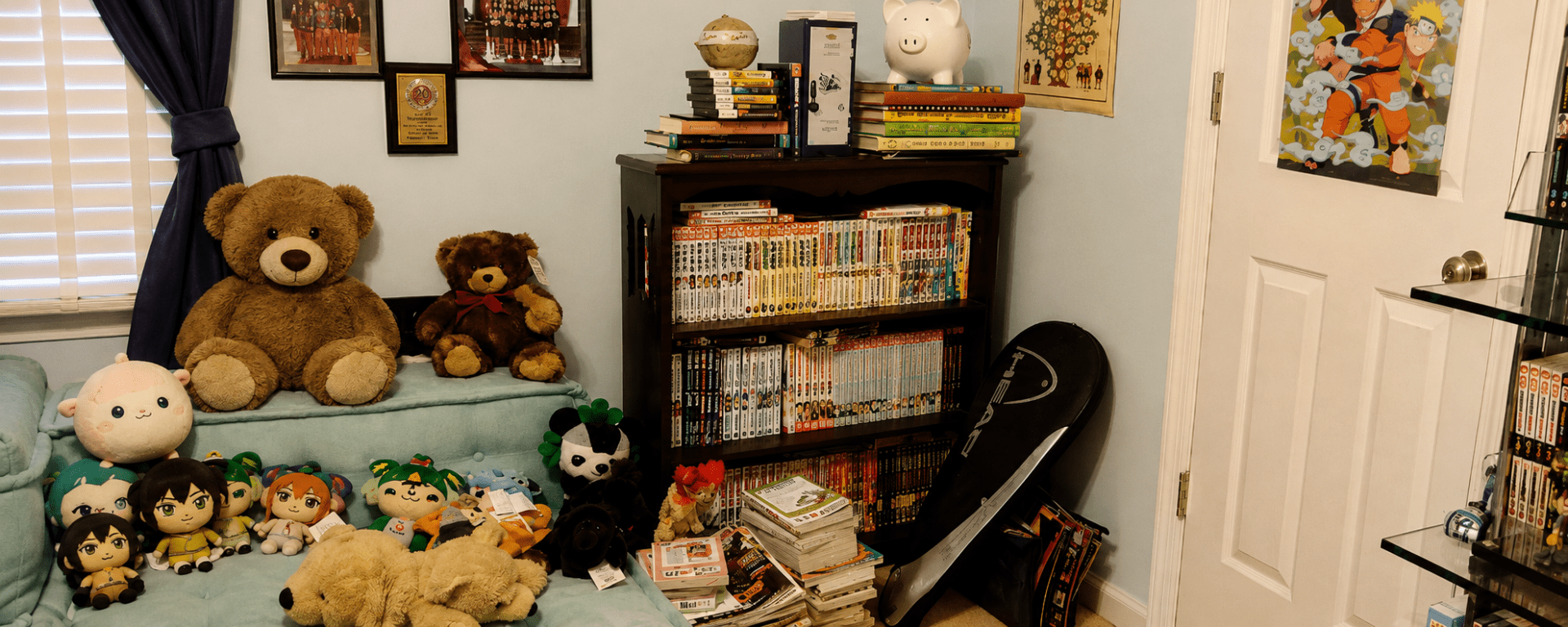
My parents were incredibly gracious about letting me buy books—better than plenty of other things a kid could be obsessed with—and I carried them everywhere. I kept manga in my backpack, and some of those volumes became completely worn out from being read so many times. I could finish an entire volume during the roughly 20-minute car ride home.
From there, manga naturally led to anime. I watched Fullmetal Alchemist, Bleach, Naruto, One Piece and honestly so many others that I couldn’t list them all now if I tried. Once I realized all of this media was coming from Japan, I started researching more and more of what Japan was producing with whatever limited resources the early-2000s internet put at my fingertips.
At that point, though, I still wasn’t thinking, “I want to live in Japan.” I just wanted more of what I had discovered. More manga, more anime, more stories, and more access to things that hadn’t been translated yet.
When I visited Japan for the first time at 16, that was still very much where my head was. I wasn’t walking around thinking about how badly I wanted to live there. What I desperately wanted was to find a bookstore.
I wanted REAL Japanese manga.
I remember begging my parents to take me somewhere I could buy it, along with books that might help me start learning Japanese on my own.
Getting my hands on Japanese manga IN Japan felt like I had somehow stepped into the future. English translations were much slower back then, so the Japanese releases were often MANY volumes ahead of what I could buy at home. The only problem was that I couldn’t actually read them, and I wanted to.
I stashed the manga I bought on that trip away in my room almost like trophies, thinking that maybe one day I would actually be able to read them. They are actually still sitting in my old bedroom today.
After that trip, I became even more interested in learning Japanese. My high school didn’t offer it, so I took Chinese instead because it was the closest option available to me. I didn’t properly start learning Japanese until college, but the motivation had been there for years. I wanted to understand the things I loved in their original language instead of always experiencing them through a translation.
Then, right before college, my interest started expanding again.
I had always paid attention to anime openings and endings, but at some point I started becoming curious about the actual artists behind the music. That eventually led me to seeing Yamada Ryosuke performing “Asia no Yoru” on The Shounen Club. From there I found Hey! Say! JUMP, which then led me into the whole world of Johnny’s groups.
Once again, I went down another rabbit hole.
Looking back, I think that was another important shift for me. Manga and anime had introduced me to Japan through fictional worlds, but Japanese music and idols made my interest feel much more connected to contemporary, real-life Japan. I started becoming curious about the language, pop culture and everyday life in a different way than I had before.
By the time I was choosing a university, Japan was no longer just something I was interested in through media. I actively wanted to study the language, spend more time there and see where that interest could take me.
That was one of the reasons I chose Elon University in the end. They had a Japanese program, a relationship with Kansai Gaidai University and even a winter-term program that spent about a month in Japan.
So I did all of it.
I went on the winter program, studied abroad, did a personal research trip for college credit, and traveled to Japan with a close Japanese friend from school after my first year. I ended up going to Japan every year during college.
Most of those trips lasted about a month, and each one gave me more exposure to what Japan was actually like beyond the media I had grown up consuming. At the same time, they were still structured. Someone was organizing things, I was supervised, transportation was planned, food was often taken care of, or I was in a rural area where my experience was very different from independently living in a city.
I was seeing Japan, but I wasn’t quite living in it yet.
That wouldn’t happen until my semester abroad at Kansai Gaidai University in 2011, and that was when everything changed.
Anime and manga didn’t make me move to Japan. They opened a door, and I just kept walking through it.


One thought on “The Life I Built in Japan Started With a Manga”